How Parking Operators Can Track Which Marketing Channels Actually Drives Online Reservations

Better visibility into campaign performance, customer behavior, and completed bookings can help parking operators make smarter marketing decisions.
If you operate a parking location and invest in digital marketing, one question matters more than almost any other: Which efforts are actually producing reservations?
A lot of operators can see website traffic. Fewer can clearly see which campaigns, channels, or referral sources are influencing quote requests, reservation starts, and completed bookings. That gap makes it harder to make smart marketing decisions, justify ad spend, or improve the online reservation experience.
By using UTM campaign tracking, Google Analytics 4, and a reservation flow that supports event tracking, parking operators can get better visibility into how customers arrive, what they do on the site, and where they convert. Google explains that UTM parameters help identify which campaigns refer traffic, and those values appear in GA4’s acquisition reporting. Learn more in Google’s UTM documentation.
Traffic Alone Is Not Enough
Website traffic is useful, but it only tells part of the story.
If someone visits your parking website from a Google ad, a Facebook campaign, an email, or a partner link, traffic numbers alone do not tell you whether that visit led to meaningful action. What operators really want to understand is:
Why UTM Tracking Matters
UTM parameters are small pieces of text added to a URL that help identify where traffic came from. Google documents common UTM fields such as utm_source, utm_medium, utm_campaign, utm_term, and utm_content.
See Google’s campaign URL guidance.
Instead of sending traffic to a plain reservation URL, an operator can use tagged links from email, paid search, social media, or referral campaigns to separate performance in Google Analytics.
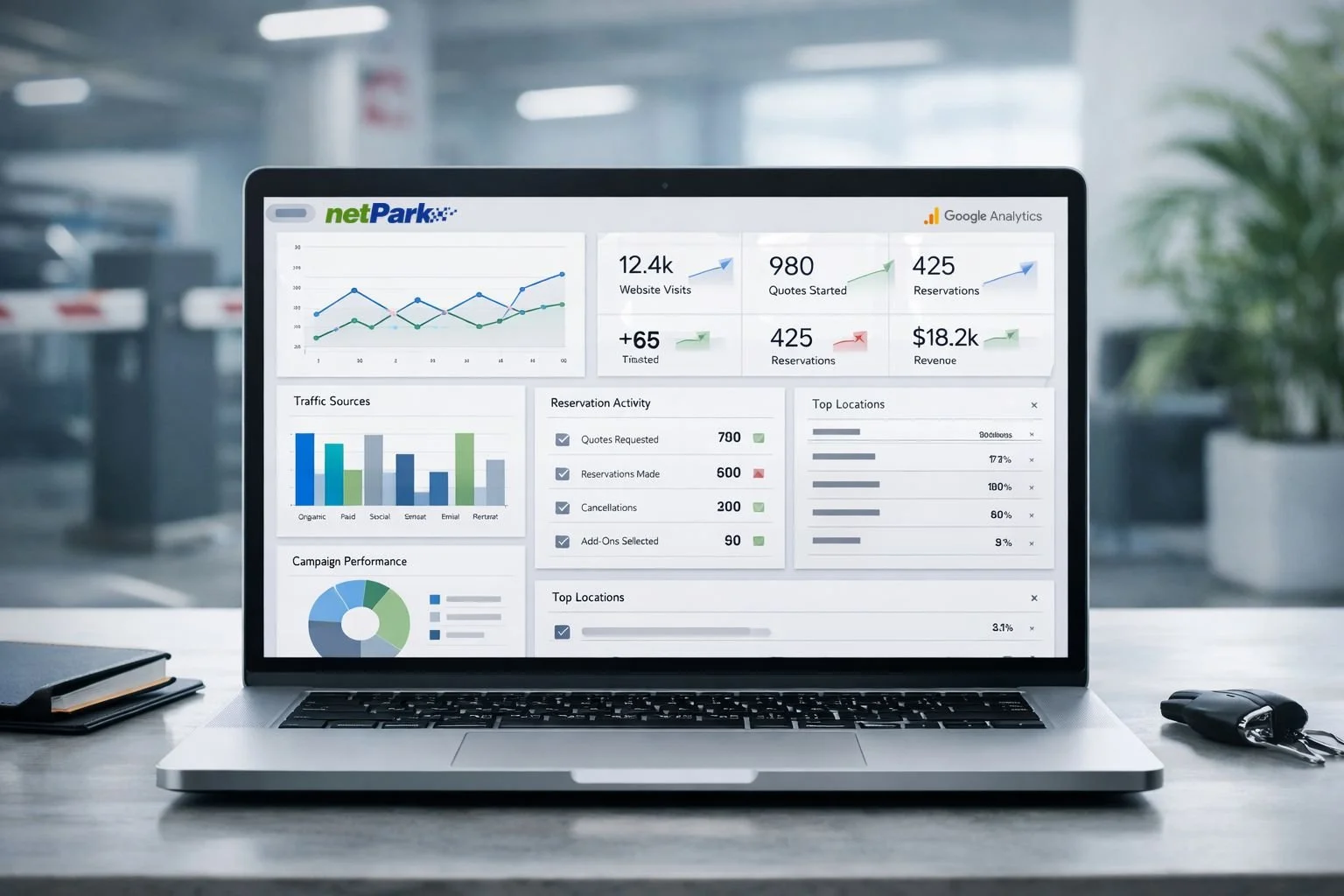
What Parking Operators Should Be Tracking
For parking businesses, the goal is not just to measure visits. It is to measure the actions that indicate booking intent.
- Location changes
- Quote requests
- Quote selections
- Sign-ins or account lookups
- Service or fee selections
- Completed purchases
That kind of event tracking helps turn your reservation website into more than a digital brochure. It gives you a clearer view of how customers move from arrival to purchase.
Google’s GA4 ecommerce documentation explains that ecommerce events such as purchase are not collected automatically, but when they are implemented correctly, Analytics can use them to populate monetization and ecommerce reporting.
Read Google’s GA4 ecommerce event setup guidance.
Looking for better visibility into your marketing and reservations?
netPark helps operators connect online reservation activity with the reporting they need to make more informed decisions. See how our platform can support your business.
Request a DemoWhy This Matters for Marketing Decisions
When campaign tracking and conversion events are set up properly, operators can make better decisions about where to invest time and budget.
- Is paid search driving qualified reservation traffic?
- Are social campaigns generating quote requests but not purchases?
- Are email campaigns producing repeat bookings?
- Which promotions lead to the highest-value reservations?
- Which services or add-ons appear most often in completed purchases?
Where NetPark Fits In
NetPark website modules can support GA4 and Google Tag Manager configuration, capture supported UTM parameters from the URL, and attach those values to relevant custom events. The documentation also describes reservation-related events and a purchase event structure that includes transaction and item data for Google Analytics reporting.
Review the NetPark knowledge base article.
In practical terms, operators can start answering questions like:
- Which campaign brought the visitor in?
- What quote did they select?
- What services or options were included?
- Which traffic sources appear to influence completed purchases?
A Note on Implementation
netPark supports these types of tracking through its website modules, but we do not provide SEO services or set up and manage Google Analytics, Google Tag Manager, or related tracking tools on behalf of clients.
Instead, our documentation is designed to help your team understand how netPark interacts with Google Analytics, Google Tag Manager, UTM tracking, and reservation-related events.
If you want to implement or refine this tracking, the best approach is to work with your web developer, digital marketing partner, or the documentation for your website platform or content management system. With the right setup, netPark’s tools can work smoothly within that broader measurement framework.
A Few Important Cautions
Analytics is powerful, but only when it is set up thoughtfully.
Google Analytics does not automatically collect every ecommerce interaction by default. Key events and parameters must be implemented correctly, and Google recommends using the right event names and parameter structures so reporting populates properly.
Ready to See What Better Visibility Could Look Like?
If your current setup makes it difficult to connect marketing activity with booking behavior, it may be time to look at whether your website and reservation tools are giving you the visibility you need.
Contact us today to request a demo and see how netPark can support your business.
Contact Us / Request a Demo