
How Hospitals Can Improve Arrival, Access, and Parking Operations

How Hospitals Can Improve Arrival, Access, and Parking Operations
For hospitals and healthcare systems, parking is more than a facilities function. It shapes patient access, affects first impressions, supports operational flow, and influences how easily patients, visitors, staff, and caregivers move through the campus from the moment they arrive.
Why this matters
When healthcare leaders think about patient experience, they often focus on clinical care, scheduling, communication, and service. All of those matter. But for many patients, family members, and visitors, the experience begins much earlier — the moment they arrive on campus.
If parking is confusing, access is unclear, valet service is slow, or people have to navigate a complex campus under stress, frustration begins before they ever reach the front desk or care team. For hospitals and healthcare facilities, parking is not just a logistics issue. It is part of access, part of operations, and part of the overall experience.
Who this article is for
- Parking Manager / Senior Parking Manager
- Valet Manager / Transportation Manager
- Director of Facilities
- Director of Hospital Operations
- VP of Operations
- Patient Experience Leader
- Security Manager
- Campus Services Manager
What better parking operations should support
- Smoother patient and visitor arrivals
- Better coordination between valet and self-park
- Clearer separation of staff, patient, and visitor parking
- Real-time visibility into volume and congestion
- Stronger accountability and auditability
- Better reporting for campus operations
Parking is part of the patient experience
Patients do not arrive at a hospital in the same mindset as guests arriving at a hotel, retail center, or entertainment venue. Many are already dealing with anxiety, physical discomfort, mobility challenges, time-sensitive appointments, or concern for a loved one. Even a small amount of confusion at arrival can add meaningful stress to the visit.
That makes parking and access more important than many organizations realize. Clear options, smooth flow, and a well-managed arrival process can help reduce friction at the very start of the patient journey.
For healthcare leaders, that means parking should be treated as part of the overall experience strategy. A better arrival process can support patient satisfaction, reduce operational strain on front-line teams, and create a stronger first impression across the facility.

Arrival is part of the care experience. Clear parking flow, accessible paths, and a less stressful approach to entering the campus can shape the entire visit before a patient ever reaches the front desk.
Hospitals need visibility into both valet and self-park operations
Many healthcare campuses rely on a mix of valet and self-parking. Some patients and visitors may benefit from valet because of age, injury, mobility limitations, or the location of their appointment. Others will use self-park, while staff, vendors, and physicians may have separate parking rules and designated areas.
Managing all of that through disconnected systems or manual workarounds creates unnecessary complexity. Teams may lose visibility into traffic patterns, operational bottlenecks, validations, staffing needs, or how different parking areas are actually being used.
The right parking software should bring valet and self-park together into one operational view. That gives managers a more complete understanding of parking activity across the facility and allows teams to make faster, more informed decisions.
A smoother arrival experience reduces friction for patients and visitors
In healthcare, parking is not just about where vehicles go. It is about how easily people can get from arrival to the care they need.
The right parking system should help reduce friction by supporting a more organized, more predictable arrival process. That can mean improving valet workflows, reducing confusion between patient and visitor parking areas, creating better visibility into available capacity, and helping teams respond more quickly when one area becomes congested.
This matters across many types of healthcare environments, including acute care hospitals, outpatient centers, specialty clinics, medical office buildings, and large health system campuses.
In a healthcare setting, parking should help people feel oriented and supported — not uncertain or delayed.
Hospitals need better ways to manage different parking groups
Healthcare parking is rarely one-size-fits-all. Patients, visitors, staff, physicians, volunteers, vendors, and special service groups often need to be handled differently. Some may require proximity to certain buildings. Some may need access at specific times. Some may require validations or department-specific permissions.
Without a strong system in place, these differences are often managed through manual processes, inconsistent communication, or loosely enforced rules. That can create confusion, inefficiency, and avoidable tension between operational needs and the experience of the people using the campus.
Parking software should help hospitals manage these user groups more intentionally. It should allow leadership to create structure around access, permissions, workflows, and reporting while still keeping the system practical for front-line teams.
Real-time visibility helps teams respond faster
Hospital operations change quickly. Morning outpatient surges, visiting hours, shift changes, emergency department traffic, construction impacts, and special events can all affect parking demand in real time. When teams do not have visibility into what is happening, they are forced to react after problems have already developed.
Strong parking software should provide real-time insight into activity across valet and self-park operations. That includes occupancy, transaction activity, traffic patterns, and areas where congestion or imbalance may be building.
For managers, that visibility supports better staffing and faster decisions. For operations leadership, it helps create a more proactive approach to arrival and access management.
Security and accountability are essential in healthcare environments
Healthcare facilities require a high level of operational accountability. Parking is no exception. Large campuses often need clear visibility into staff activity, incidents, exceptions, validations, and vehicle movement across multiple locations.
A strong parking platform should help support that accountability through reliable activity tracking, user-level visibility, incident documentation, and reporting that can be reviewed when needed.
This is important not only for parking leadership, but also for facilities, security, and hospital operations teams. Better auditability can help reduce disputes, support internal review, and create stronger confidence in how the operation is being managed.
When the system creates a clear operational record, teams are better equipped to address issues consistently and improve processes over time.
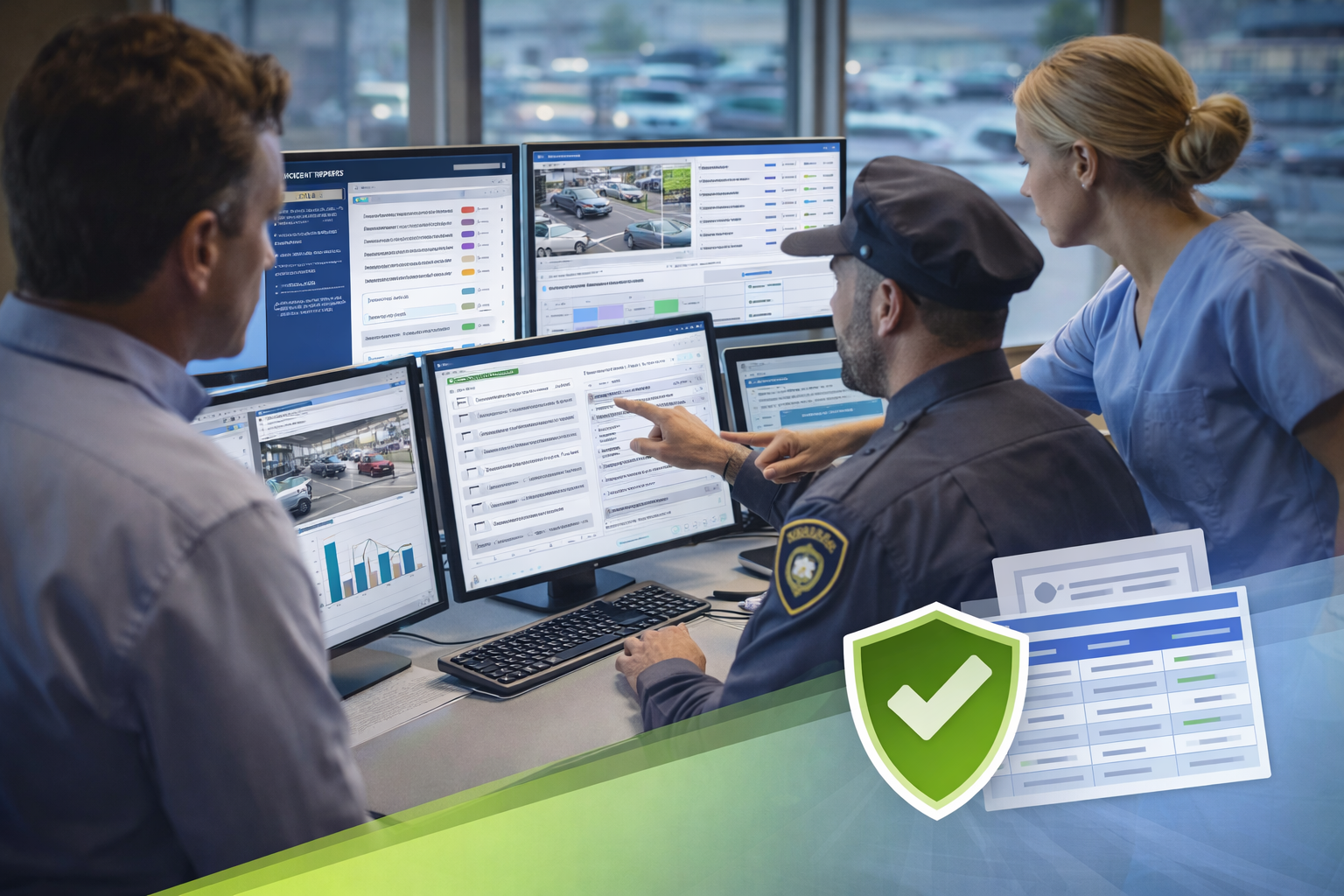
Parking accountability matters across healthcare operations. Clear activity records, stronger visibility, and reviewable reporting help support security, facilities, and operational teams across complex campuses.
Reporting should support operational improvement
Parking data should do more than sit in a report. It should help healthcare leaders understand how arrival and access are affecting the organization.
The right system should make it easier to answer questions such as:
- Which parking areas are busiest at what times?
- Where are traffic bottlenecks occurring?
- How is valet demand changing over time?
- Are staffing levels aligned with peak demand?
- How are validations or access exceptions being used?
- Where are patients and visitors likely experiencing friction?
These insights can help hospitals make better decisions about staffing, traffic management, communication, and parking policies. They can also help leadership identify where operational changes may improve both efficiency and the patient experience.
The right platform should scale with the healthcare system
Hospitals and healthcare systems are complex and constantly evolving. New clinics open. Parking patterns change. Construction shifts access routes. Departments grow. Patient volumes move. What works for a single facility today may not work across a broader system tomorrow.
That is why hospitals should look for parking software that can grow with them. The right platform should be able to support complexity across different facility types, user groups, and operational needs without forcing teams back into disconnected tools or manual workarounds.
A scalable parking operation is not just about handling more volume. It is about maintaining clarity, control, and consistency as the organization evolves.
Questions healthcare leaders should ask when evaluating parking software
- Can this platform support both valet and self-park in one operational view?
- Will it help us manage patient, visitor, staff, physician, and vendor parking more effectively?
- Can managers see congestion, volume, and activity in real time?
- Does it improve accountability through activity tracking and reporting?
- Can it help reduce arrival friction for patients and visitors?
- Will it scale with the needs of a complex healthcare campus or health system?
Better parking operations support better healthcare access
Hospitals do not exist to manage parking. They exist to care for people. But the arrival experience still matters, because it shapes how easily people can access that care.
When hospitals improve arrival, access, and parking operations, they make the experience better for patients, families, visitors, and staff. They reduce avoidable friction. They create better visibility for operational teams. And they put stronger systems in place to support a more organized, more accountable campus environment.
The right parking software can help make that possible by bringing valet and self-park together, improving operational control, and helping healthcare leaders create a smoother experience from the very start of the visit.
See how netPark supports healthcare parking operations
Discover how netPark helps healthcare organizations improve arrival flow, support valet and self-park operations, and create stronger visibility across complex parking environments.
Explore netPark