
Why Cruise Port Parking Is Unlike Any Other Parking Operation
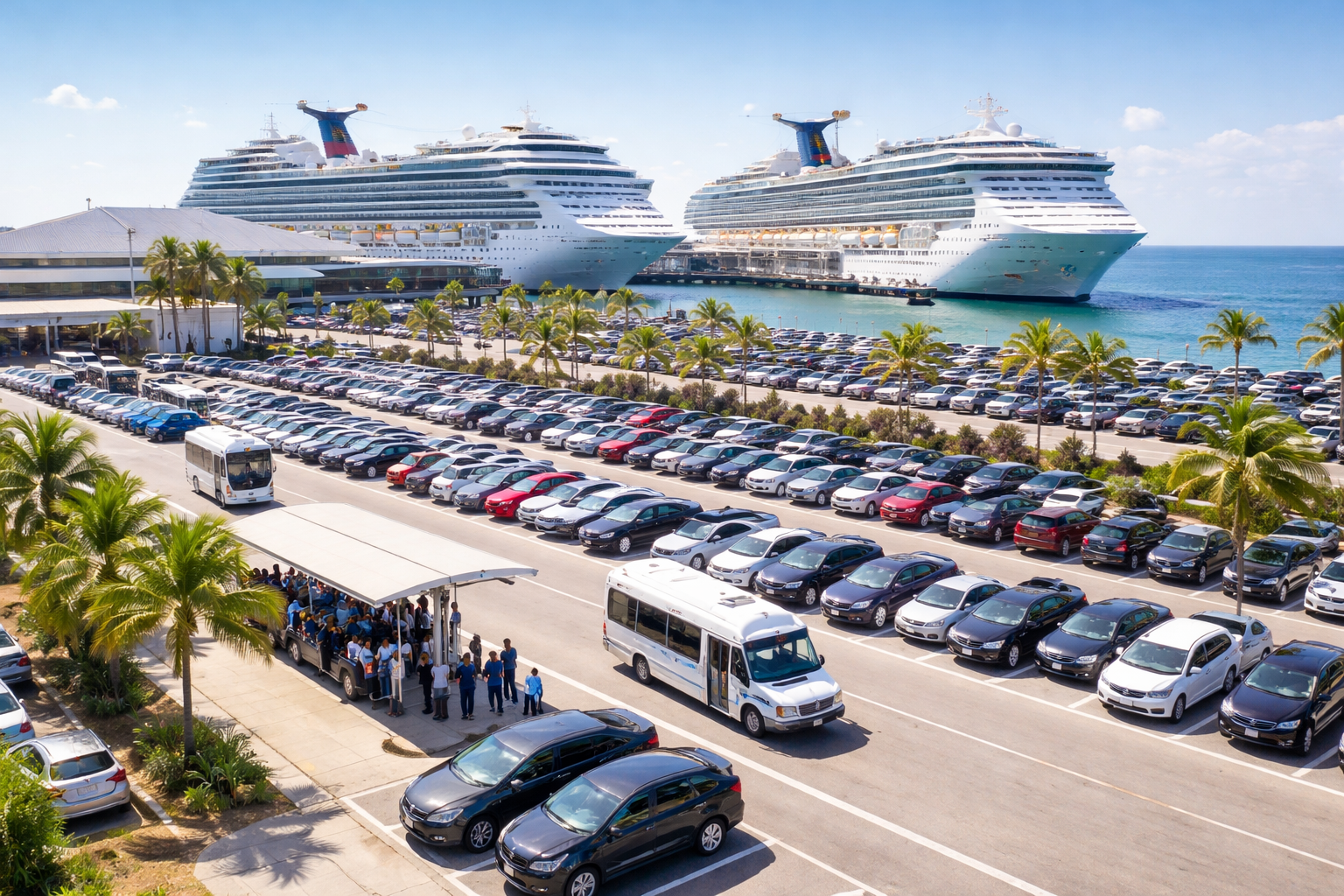
Most parking environments are designed for short stays, predictable turnover, and steady daily demand. Cruise port parking is the opposite.
On embarkation days, thousands of vehicles arrive within narrow time windows. Those vehicles remain parked for days—or even weeks—before returning all at once when ships dock. Add shuttles, luggage handling, buses, oversized vehicles, and port authority requirements, and cruise parking quickly becomes one of the most complex parking environments to manage.
For port authorities and parking operators, cruise parking isn’t just another facility—it’s a logistics-driven, high-volume operation where performance on a handful of critical days determines guest satisfaction, revenue, and long-term partnerships.
1. Cruise Parking Combines Long-Term Storage With Peak-Day Surges
Traditional parking operations are optimized for hourly or daily turnover. Cruise ports must manage:
Massive arrival surges on embarkation days
Extended stays tied to voyage length
High-volume departures when ships return—often multiple ships at once
This creates a unique dual challenge:
High-speed processing during arrival peaks
Accurate long-term inventory management across multiple days and sailings
Systems built around simple time-based parking often struggle to keep up with this model, especially when multiple voyages overlap.
2. Embarkation Days Leave No Room for Error
In most parking environments, small delays are manageable. At a cruise port, even minor issues can escalate quickly.
Common risks include:
Entry lane backups spilling onto port roadways
Missed sailings due to slow check-in
Shuttle delays that ripple into terminal congestion
Staff overwhelmed by manual exceptions
Because thousands of guests arrive in a short window, cruise parking operations must scale instantly—adding lanes, adjusting access rules, and enabling special staff workflows without interrupting flow. Reliability and speed are non-negotiable.
3. Parking Is Part of the Cruise Guest Experience
For cruise passengers, parking is often the first in-person interaction with their vacation.
When parking operations break down, guests experience:
Confusing arrival instructions
Long queues at entry
Uncertainty around reservations
Stress about shuttle pickup locations
Even though parking may be managed separately from the cruise line, the guest experience reflects on the port and the overall cruise journey. Increasingly, cruise ports recognize parking as an extension of the guest experience—not just a storage function.
4. Shuttle Coordination Is Core Infrastructure
Unlike city garages or office parking, cruise port parking almost always depends on active shuttle operations.
That means parking systems must support:
Clear pickup instructions tied to voyage or terminal
Real-time communication with guests
Coordination between parking staff and shuttle drivers
Smooth transitions during peak embarkation and return periods
When shuttle communication breaks down, congestion and guest frustration increase immediately.
5. Revenue Risk Is Higher—and Often Hidden
Cruise port parking introduces revenue challenges that don’t exist in short-term environments:
Multi-day and voyage-length rate structures
Overstay management when ships return late
Manual exceptions during peak arrival periods
Disputes days or weeks after vehicles are retrieved
Without detailed audit trails, configurable stay rules, and voyage-level reporting, revenue leakage can go unnoticed—especially during the busiest days of the year.
6. Port Authority Rules Add Another Layer of Complexity
Cruise ports typically operate under strict port authority guidelines that may dictate:
Approved access hardware
Security and compliance standards
Payment and data requirements
Controlled access to gated and ungated areas
Parking operations must be flexible enough to adapt to these constraints while remaining reliable during peak conditions.
7. One Bad Day Can Have Long-Term Consequences
In cruise port parking, performance is judged on the days that matter most. A single problematic embarkation day can lead to:
Guest complaints that linger well beyond the cruise
Strained relationships with port authorities or cruise partners
Increased operational costs and staffing pressure
Lost confidence in the parking operation
Cruise parking is unforgiving—but with the right systems and workflows, it doesn’t have to be chaotic.
Cruise Port Parking Requires a Purpose-Built Approach
Cruise port parking sits at the intersection of:
Long-term parking management
Event-scale traffic surges
Transportation and shuttle coordination
Guest experience delivery
Operators who treat cruise parking like a standard garage often struggle with congestion, revenue loss, and operational stress. Those who adopt a voyage-based, peak-ready approach are far better positioned to operate efficiently and scale with demand.
See How netPark Supports Cruise Port Parking Operations
Managing cruise port parking isn’t about working harder on embarkation days—it’s about using technology designed for voyage-based demand, extended stays, and high-volume turnarounds.
netPark helps cruise port operators manage reservations, access, billing, shuttles, and reporting from a single cloud-based platform—purpose-built for complex environments like cruise terminals.
If you manage parking at or near a cruise port, we’d be happy to show you how netPark supports smoother embarkation days and more controlled long-term operations.
👉 Request a Cruise Port Parking Demo
Discover how netPark helps reduce congestion, protect revenue, and deliver a better experience for guests and staff alike.