
How to Start Charging Truckers for Parking on Your Property
If you own land near a highway, warehouse district, industrial park, port, rail yard, distribution center, or logistics corridor, you may have a practical revenue opportunity sitting right in front of you: paid truck parking.
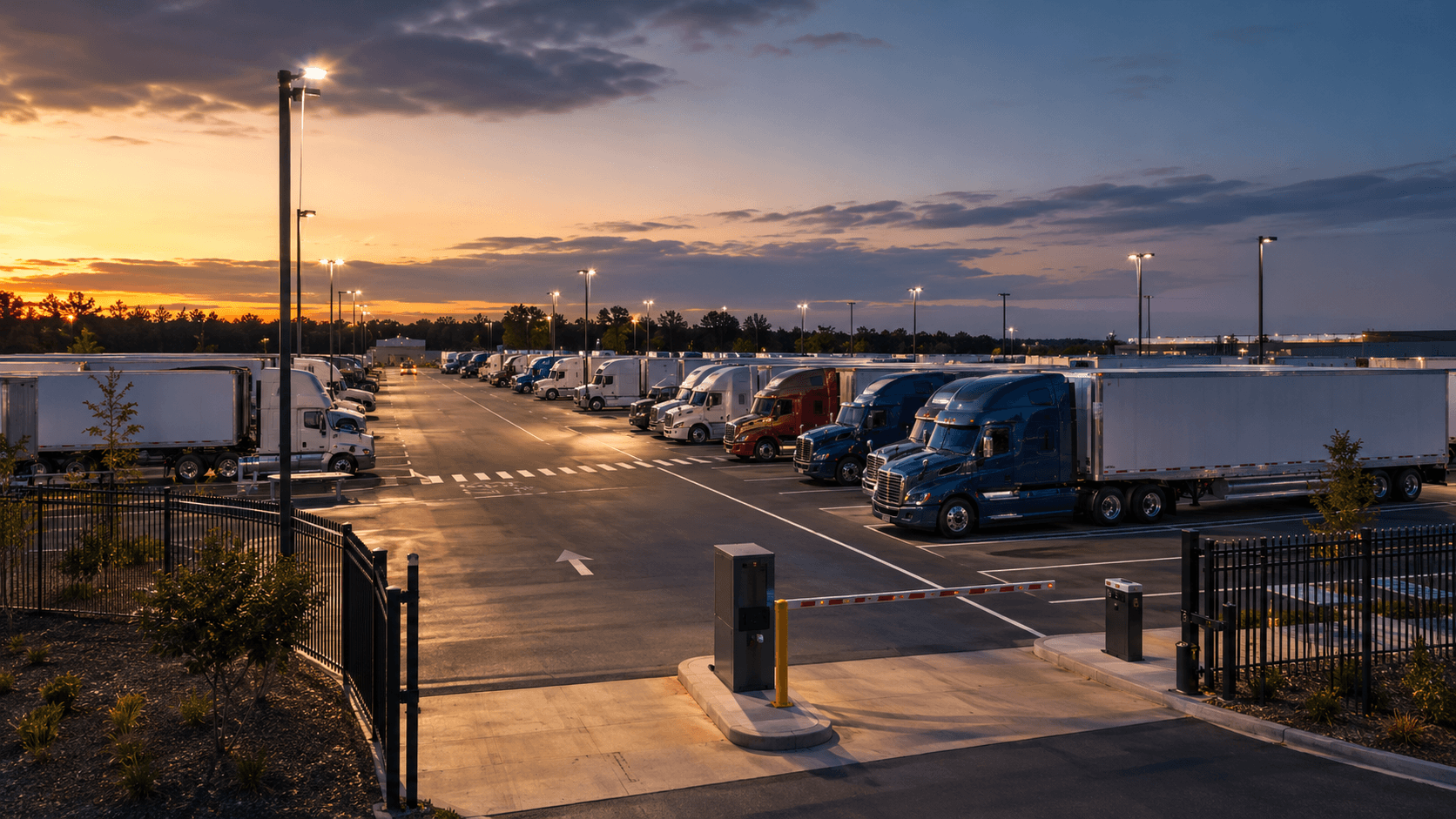
Truck drivers and fleets need safe, reliable places to park. Property owners need a way to turn available space into organized, controlled, and recurring revenue. The challenge is that charging truckers for parking is not as simple as putting up a sign and collecting cash.
To run a truck parking operation the right way, you need to answer a few important questions.
Can drivers reserve a space in advance?
Drivers and dispatchers need a clear way to know whether parking will be available before they arrive.
Can fleets manage recurring accounts?
Fleet customers often need monthly billing, invoices, account access, and a reliable way to manage multiple vehicles or drivers.
Can you control who enters and exits?
Paid truck parking needs access rules, credentials, and a way to prevent unauthorized use of the property.
Can you track occupancy, revenue, and overstays?
Without reporting, it is difficult to understand demand, pricing, usage, and operational performance.
A strong truck parking operation starts with the property. But it succeeds with the right system.
Why Paid Truck Parking Is Becoming a Real Opportunity
Truck parking demand is not just a convenience issue. It is an operational and safety issue across the freight industry.
The Federal Highway Administration identifies truck parking shortages as a national safety concern. FHWA notes that when official parking is unavailable, tired drivers may continue driving or park in unsafe locations such as shoulders, exit ramps, or vacant lots.
That creates a clear opportunity for property owners with the right location and layout. If your property is near freight movement, industrial activity, major roadways, ports, warehouses, or distribution centers, truck parking may be a viable use case.
NATSO has also emphasized that the private sector provides a major share of U.S. truck parking capacity and that investment decisions must account for land, permitting, zoning, operations, maintenance, security, and insurance costs.
Before You Start Charging: Confirm the Property Can Legally and Operationally Support Truck Parking
This article is not legal, zoning, insurance, or regulatory advice. Property owners should speak with the appropriate local officials, legal counsel, insurance providers, and permitting authorities before launching a paid truck parking operation.
Before collecting payment from your first driver, confirm that paid truck parking is allowed on your property and that the site can safely support commercial truck activity.
- Is commercial truck parking allowed under current zoning?
- Do you need a special use permit, business license, site plan approval, or other local approval?
- Are there restrictions on overnight parking, trailer storage, idling, lighting, signage, or vehicle size?
- Does your insurance policy cover commercial truck parking activity?
- Can trucks safely enter, exit, turn around, and park on the property?
- Is the surface appropriate for heavy commercial vehicles?
- Are lighting, security, drainage, and traffic flow sufficient?
- Do you have clear rules for stay length, payment, cancellations, refunds, overstays, and prohibited uses?
Software will not solve a property that is not legally or operationally ready. But once the site is viable, the right parking platform can help you manage the business professionally.
Step 1: Decide What Type of Truck Parking You Want to Offer
Not every truck parking operation is the same. Some lots focus on overnight parking. Others support monthly fleet accounts. Some provide trailer storage, staging, or long-term commercial vehicle parking. Others may offer a combination of daily, weekly, and recurring parking.
Overnight Truck Parking
Drivers pay for a single stay, often based on arrival and departure time.
Reserved Truck Parking
Drivers or dispatchers reserve a space in advance, usually online.
Monthly Truck Parking
Fleet customers, owner-operators, or recurring drivers pay for ongoing access.
Fleet or Group Accounts
A company manages multiple drivers, vehicles, invoices, and payment methods under one account.
Commercial Vehicle Storage
The lot supports longer-term vehicle or trailer storage with recurring billing.
The right model depends on your property, location, access points, staffing, security, and target customer.
Step 2: Create a Reservation Workflow
Truck parking is often time-sensitive. A driver nearing the end of a shift does not want to call multiple lots, wait for a response, or wonder whether a space will still be available.
A reservation system gives drivers and dispatchers a clear way to book ahead. A strong reservation workflow should allow customers to book parking online, see real-time availability, view parking options and rates, modify or cancel reservations, prepay for a parking session, and receive a digital or printable access pass.
This matters because reservations turn uncertain demand into planned demand. Instead of waiting for drivers to show up and hoping space is available, you can sell inventory in advance and manage availability more confidently.
For more on the broader truck parking opportunity, read netPark’s article on Bridging the Truck Parking Gap.

Step 3: Decide How Customers Will Enter the Lot
Once a driver pays or reserves, the next question is access. Manual access may work for a very small operation, but it can become difficult to manage quickly. As volume grows, you need a more controlled process.
QR Code Passes
Useful for prepaid reservations and digital access passes.
RFID Credentials
Helpful for recurring customers, monthly accounts, or controlled access programs.
License Plate Recognition
Can help connect vehicles to reservations, accounts, or access permissions depending on the hardware and workflow.
Gate, Kiosk, or Mobile Workflows
Support staffed, automated, or hybrid operating models depending on the property and customer experience.
The goal is simple: paid customers should be able to enter smoothly, and unauthorized vehicles should not be able to use the lot without permission.
Step 4: Build a Payment and Billing Workflow
If you are asking, “How do I start charging truckers for parking?” the payment workflow is one of the most important pieces to get right.
Cash, texts, screenshots, and handwritten records may work temporarily, but they create problems as volume increases.
- Unclear payment status
- Lost receipts
- Manual reconciliation
- Disputes over who paid
- No easy way to bill fleets
- No recurring payment workflow
- No clean reporting by day, customer, or parking type
A stronger system should support both one-time and recurring revenue. For one-time drivers, that may mean prepaid reservations and digital receipts. For fleets and long-term customers, that may mean monthly billing, account management, stored payment methods, invoicing, ACH or credit card payments, and grouped accounts.
The real opportunity is not just charging one driver for one night. It is creating a repeatable revenue model that supports both transient and recurring customers.
Step 5: Price the Lot Based on Parking Type and Demand
Truck parking should not always be priced as one flat product. Different vehicle types, stay lengths, and customer types may justify different rates. A box truck, tractor, trailer, cab-and-trailer combination, or oversized vehicle may require different space and operating considerations.
Flexible Rate Types
Daily, overnight, weekly, monthly, fleet, reserved, premium, and oversize rates can all serve different use cases.
Demand-Based Adjustments
If demand changes by day, time, customer type, or vehicle type, your pricing tools should allow you to respond quickly.
The key is flexibility. If demand changes, your pricing should not require rebuilding the operation manually.
Step 6: Track Occupancy, Revenue, and Overstays
Once your lot is active, you need visibility. Many truck parking operators know they are busy, but they cannot easily answer basic performance questions.
- How many spaces were sold last night?
- Which parking types sell out first?
- How much revenue came from daily parking versus monthly accounts?
- How many vehicles overstayed?
- Which customers are recurring?
- Which rates are working?
- Where are you losing revenue?
Without reporting, pricing and expansion decisions become guesswork. A modern truck parking operation should give you clear reporting around revenue, occupancy, customer activity, access events, and operational performance.
For existing operators still relying on manual processes, read Running a Truck Parking Lot Without Software? Here’s What It’s Costing You.
Step 7: Make the Customer Experience Simple
Drivers and dispatchers are not looking for complexity. They want a reliable place to park and a simple way to know the space will be available.
For Drivers
- Online reservations
- Clear pricing
- Easy modify/cancel options
- Digital passes
- Automated receipts
For Fleets
- Self-service account access
- Stored payment methods
- Fleet account tools
- Monthly billing
- Quick entry and exit
The best truck parking operations are not just controlled from the operator side. They are also easy for customers to use.
Step 8: Plan for Growth Before the Lot Gets Busy
It is much easier to build the right system before demand overwhelms the operation.
If you start manually, you may quickly run into too many calls, too many payment questions, too many access exceptions, no clean customer records, no fleet billing process, no reporting, and no scalable way to add locations.
That is why property owners should think beyond the first few paid spaces. If the goal is to build meaningful revenue from truck parking, the system should support growth from the beginning.
How netPark Helps Truck Parking Operators Manage Paid Parking
netPark helps truck parking operators manage reservations, access, billing, payments, and reporting in one cloud-based platform.
Reservations & Passes
Support online booking, modify/cancel workflows, prepaid reservations, real-time pricing and availability, and digital or printable access passes.
Flexible Credentials
Use QR, RFID, or license plate recognition depending on your access hardware and operational needs.
Access Control
Integrate with gates, automated equipment, kiosks, LPR cameras, and approved access hardware.
Monthly & Group Billing
Support recurring accounts, ACH and credit card payment management, automated billing, invoicing, and fleet account workflows.
Configurable Rates
Manage multiple parking types, vehicle categories, blackout dates, and rate structures.
Reporting & Analytics
View practical reports for revenue, occupancy, operational metrics, inventory, and access activity.
The goal is to help you move from informal parking to a controlled, professional, revenue-generating operation.
Is Your Property Ready for Paid Truck Parking?
You may be ready to explore paid truck parking software if several of these apply:
- You already have trucks asking to park on your property.
- You are near a highway, industrial corridor, port, warehouse, rail yard, or distribution center.
- You want to offer daily, overnight, weekly, or monthly parking.
- You need a way to collect payments reliably.
- You want drivers or dispatchers to reserve spaces online.
- You need to control access to the lot.
- You want to support fleet accounts or recurring billing.
- You need better reporting before expanding.
- You want to reduce manual work before demand grows.
If several of these apply, the next step is not just “start charging.” The next step is designing the right workflow.
Frequently Asked Questions
Can drivers book same-day parking?
Yes, depending on your policy and available inventory. A modern reservation workflow can support real-time reservations and automated credentials.
Does paid truck parking require access control?
Access control is strongly recommended for most paid operations because it helps confirm who is allowed on the property and supports a cleaner customer experience.
Can fleets and recurring customers be billed monthly?
Yes. Fleet and recurring accounts often need monthly billing, payment management, invoicing, and self-service account tools.
What should I do before launching paid parking?
Confirm zoning, permitting, insurance, traffic flow, site layout, security needs, and operating policies before accepting payment from drivers or fleets.
Source Notes
The truck parking demand and safety context in this article is supported by the Federal Highway Administration’s truck parking resources. The private-sector parking and investment context is supported by NATSO’s discussion of the Jason’s Law Truck Parking Survey.
Turn Truck Parking Demand Into a Managed Revenue Stream
Paid truck parking can be a strong opportunity for the right property. But the difference between a small manual operation and a scalable parking business is the system behind it.
Have property you want to turn into paid truck parking? Talk to netPark about the reservation, access, billing, and reporting workflow you’ll need to operate it professionally.
Talk to a Truck Parking Software SpecialistLet us show you how we do parking best.